El Totumo Mud Volcano: The Complete Guide to the Mud Volcano Near Cartagena12 min read
If you are planning a trip to Colombia’s Caribbean coast, the mud volcano Cartagena travelers talk about most is El Totumo: a small, cone-shaped hill with a crater full of warm, silky mud where you float like a cork while locals give you a massage. It is quirky, a little messy and genuinely memorable. This guide explains what the El Totumo mud volcano actually is, how it formed, the legend behind it, what happens on a visit and how to plan the best possible mud volcano tour from Cartagena.
What Is the El Totumo Mud Volcano?
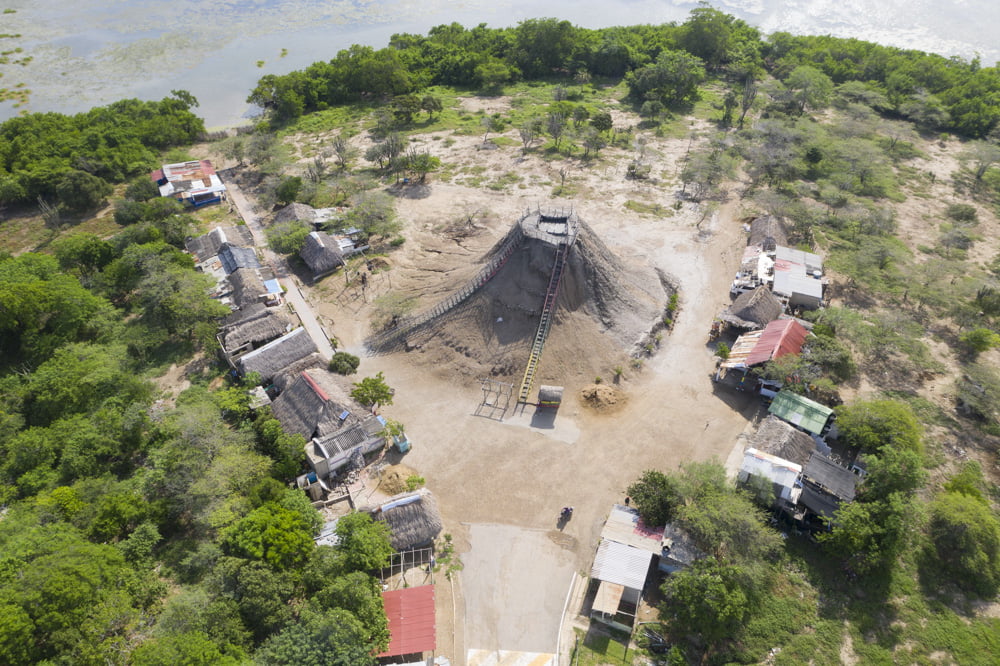
El Totumo (Volcán del Totumo) is an active mud volcano in the municipality of Santa Catalina, in the department of Bolívar, close to the border with the department of Atlántico. It rises about 15 meters (roughly 49 feet) above the surrounding flat land and sits close to sea level, next to a shallow lagoon. It is often described as the smallest volcano in Colombia, and it is certainly the most visited mud volcano in the country.
The Totumo volcano lies roughly 50 kilometers northeast of Cartagena. Depending on traffic leaving the city and the route your driver takes, the trip usually takes around one hour to an hour and a half each way, which makes it an easy half-day excursion.
At the top of the cone is a crater roughly the size of a large hot tub. It holds about 10 to 15 people at a time. The mud inside is thick, warm (not hot) and has a texture often compared to melted chocolate or wet clay.
How Mud Volcanoes Form: A Little Geology
Despite the name, a mud volcano has nothing to do with molten rock. There is no lava chamber under El Totumo and no risk of a fiery eruption. Instead, mud volcanoes form when water deep underground mixes with fine sediments such as clay and silt. Pressure from gases and fluids trapped in the rock pushes this slurry upward through faults and fissures until it reaches the surface.
Over time the mud that spills out and dries around the vent builds a cone. According to geological summaries, the gas released by mud volcanoes is dominated by methane, with smaller amounts of carbon dioxide and nitrogen. Mud volcanoes are frequently associated with sedimentary basins, petroleum deposits and zones where tectonic plates converge. Northern Colombia’s Caribbean coast has several of them, which is why you will occasionally see bubbles rising slowly through the crater at El Totumo.
Reported analyses of El Totumo’s mud list minerals such as silica, aluminum, magnesium, sodium chloride, calcium, sulfur and iron. Locals and many visitors swear the mud is good for the skin and for aching joints. Those claims are traditional rather than medically proven, so treat the experience as a fun spa-style treat, not a cure.
Why You Cannot Sink
The single most surprising thing about the crater is buoyancy. The mud is so dense that your body floats on the surface almost effortlessly. You can lie back, sit upright as if on an invisible chair or even try to “stand” without touching the bottom. Guides like to tell visitors that the crater is extremely deep; whatever the true depth, the density of the mud keeps you at the surface.
The Legend of the Priest and the Devil
Every good volcano needs a legend, and El Totumo has a memorable one. Local tradition says the volcano once spat fire and lava, and that the people of the area believed it was the work of the devil. A local priest climbed the hill and sprinkled holy water into the crater, and from that day on the fire was replaced by cool, harmless mud. The story is folklore, of course, but it is a fun reminder of how deeply the volcano is woven into the identity of the surrounding communities.
What to Expect on Your Visit
A typical visit to the mud volcano Cartagena locals know so well follows a simple, well-organized routine. Here is how it usually unfolds.
1. Climbing the Wooden Stairs
You will leave your belongings at the base and climb a steep wooden staircase built up the side of the cone. The climb is short, but the steps can be slippery once people start coming down covered in mud, so take it slowly and use the handrail.
2. Floating in the Crater
Local helpers guide you into the crater one by one. The first moment of sinking in and then bobbing back up is usually met with laughter. Once inside, you can relax, chat with other bathers and enjoy the strange weightless sensation.
3. The Mud Massage
Masseurs from the local community often offer a short massage while you float. It is quick, playful and part of the experience. If you are not comfortable with it, simply say “no, gracias” politely.
4. Photos
Because phones and mud do not mix, local photographers usually offer to take pictures with your phone or camera from the rim of the crater. They know the best angles, and it means your device stays clean.
5. Washing Off in the Lagoon
After climbing down, you will walk a short distance to the nearby lagoon, where local women help wash the mud off you, often by pouring water over you with a bowl and helping rinse your swimsuit. It is a lively, sociable end to the experience, and it is an important source of income for families in the area.
Practical Tips for the Totumo Volcano
- Bring small bills for tips (propinas). Most helpers, including masseurs, photographers and the women who wash you, work for tips rather than a salary. Amounts and customs can change, so ask your guide what is customary on the day and agree on anything that is charged as a fixed fee before the service starts.
- Carry cash. The entrance fee, tips, drinks and snacks are typically paid in Colombian pesos. Card payments may not be accepted on site.
- Leave jewelry at the hotel. Rings, earrings and necklaces can slip off in the mud and are almost impossible to recover.
- Wear an old swimsuit. The mud can stain light-colored fabrics. Dark swimwear you do not mind ruining is the best choice.
- Pack a towel, a change of clothes and sandals. You will want dry clothes for the drive back, and sandals make the walk to the lagoon easier.
- Remove contact lenses or be very careful to keep mud away from your face and eyes.
- Go early. Morning visits are cooler and usually less crowded than midday, when large group buses arrive.
- Bring sunscreen and water for the time before and after your mud bath.
Who Should Think Twice Before Going
El Totumo is safe and enjoyable for most healthy travelers, but it is not ideal for everyone. Consider skipping the crater, or check with your doctor first, if you:
- Are pregnant.
- Have heart conditions, high blood pressure or respiratory problems.
- Have open wounds, recent tattoos or skin infections.
- Have limited mobility; the stairs are steep and can be slippery.
- Feel uncomfortable in crowded, close-contact spaces, since the crater can feel tight when it is full.
Families with small children should also consider whether their kids will be comfortable being handled by helpers in the crater. Even if someone in your group decides not to go in, the visit is still interesting to watch from the rim.
Combining El Totumo With Other Experiences
Because the mud volcano only takes a couple of hours, many travelers combine it with another stop to make the most of the day.
Galerazamba Pink Salt Flats
Also in the Santa Catalina area, the salt flats of Galerazamba are known for evaporation ponds that can turn shades of pink. The color comes from salt-loving microorganisms that thrive in highly saline water. Salt extraction has been a local tradition here for generations. The pink tone is not guaranteed; it tends to be strongest in sunny, dry weather and fades after heavy rain, so manage your expectations if you travel in the wetter months.
La Boquilla Mangroves
Another great pairing is a canoe ride through the mangroves of La Boquilla, the Afro-Colombian fishing village on Cartagena’s northern edge, which sits right along the road between the city and the volcano. Our La Boquilla mangrove tour takes you through quiet mangrove tunnels with local fishermen, and you can learn more about this ecosystem in our guide to Cartagena’s mangroves.
Private vs. Shared Mud Volcano Tour
There are two main ways to visit El Totumo from Cartagena.
Shared tours pick up passengers from several hotels and travel in larger vans or buses. They are usually the most economical option, but they follow a fixed schedule, often arrive at the busiest times and may include stops you are not interested in.
A private mud volcano tour is designed around you. You choose the departure time (we recommend early to beat the crowds), travel in a private air-conditioned vehicle and can add stops such as the salt flats or the mangroves at your own pace. A private guide also helps you navigate tips and services on site, so there are no surprises. Prices vary depending on group size, season and the stops you add.
If you prefer a relaxed, flexible experience, explore our private El Totumo mud volcano tour. You can also browse all of our day tours from Cartagena to build a full itinerary.
Is the El Totumo Mud Volcano Worth It?
Honestly, yes, as long as you go in with the right expectations. El Totumo is small, rustic and community-run. It is not a luxury spa. What makes it special is the sheer fun of floating in warm mud, the laughter of strangers sharing a surreal moment and the chance to support local families directly. For many travelers it becomes one of the most talked-about stories of their trip to Colombia.
Ready to float? Book your mud volcano tour from Cartagena with Cartagena For Travelers and let our local team handle the logistics.
Frequently Asked Questions About the Mud Volcano in Cartagena
How far is the mud volcano from Cartagena?
El Totumo is in the municipality of Santa Catalina, Bolívar, roughly 50 km northeast of Cartagena. The drive usually takes about one to one and a half hours each way, depending on traffic.
Is El Totumo a real volcano?
It is a real mud volcano, but not a lava volcano. Mud volcanoes form when pressurized water, gases and fine sediments are pushed to the surface through faults. There is no molten rock and no risk of a fiery eruption.
Can you sink in the Totumo volcano?
No. The mud is so dense that people float on the surface. Local helpers also guide you in and out of the crater.
How much should I tip at El Totumo?
Most helpers, such as masseurs, photographers and the women who wash you in the lagoon, work for tips. Customary amounts change, so ask your guide on the day, carry small bills in Colombian pesos and agree on any fixed fee before a service starts.
What should I bring to the mud volcano?
An old dark swimsuit, a towel, a change of clothes, sandals, sunscreen, water and cash in small bills. Leave jewelry at your hotel because it is easily lost in the mud.
Is the mud volcano good for your skin?
The mud contains minerals and many visitors feel their skin is softer afterward, but health claims are traditional and not medically proven. Enjoy it as a fun spa-style experience.
Who should not go into the mud volcano?
Pregnant travelers, people with heart, blood pressure or respiratory conditions, anyone with open wounds or fresh tattoos and people with limited mobility should check with a doctor or skip the crater.
Plan your visit with confidence: our private Totumo volcano experience is built around your schedule, so you can enjoy the mud without the crowds or the rush. For background reading, see the El Totumo article on Wikipedia, the overview of how mud volcanoes form and Atlas Obscura’s entry on El Totumo.